
How to Overcome Objections in Sales Before Your Customers Even Think “No”


Eliminating your customers’ objections before they form is often more effective than addressing the same objections later. You can achieve this by knowing your customers' concerns, building solutions into your offer, and addressing doubts using their own words.
How to Kill the Objections Before They Even Start
The best salespeople don’t wait for objections—they anticipate and prevent them. By predicting what’s on your customer’s mind and addressing it before they speak, you remove the friction that makes them pause. This shifts your approach from reacting to proactively guiding them toward “yes.”
Step 1: Know what matters
Understanding your customers goes beyond demographics. You need to know what excites them, what scares them, and what they believe is standing in their way. When you think like they do, you can see the objections coming and design offers that make them irrelevant.
How to do it:
- Spend time where they spend time—forums, social media, direct conversations, etc.
- Learn their goals, fears, and frustrations.
- Identify the barriers they believe are blocking success.
- Note the exact words they use to describe their problems and desired results.
These insights will become your playbook for crafting offers that feel tailor-made.
Step 2: Build the answer into your offer
Strong offers address doubts before customers can even ask. This isn’t about piling on extras; it’s about removing risk, building trust, and making “yes” feel effortless.
If people worry they’ve “tried this before and failed,” build in accountability calls, a quick-start plan, and progress tracking. If they fear wasting money, add a clear money-back guarantee. If they are unsure about results, show case studies and transformations from people just like them. Every element should counter a specific hesitation.
How you present these features matters: A guarantee becomes proof that you believe in your product, and a bonus becomes an answer to “What if I get stuck?” When your offer is built to solve concerns up front, customers see a complete solution, not a list of features, and buying feels like the obvious choice.
Step 3: Mirror the problem, then clear the path
To break down resistance, show customers you understand exactly where they’re coming from. Use their own words to describe their problem, then guide them to the solution. If they say, “This seems impossible for someone like me,” reply, “You might think that, but here’s why it’s not.”
Acknowledge the concern, then pivot to proof by sharing stories of people in the same situation who succeeded, and outline the steps that got them there. The goal isn’t to argue—it’s to validate their feelings while showing a realistic way forward.
The 5 Silent Killers Destroying Your Sales
Some objections are predictable, so if you can spot them early, you can dismantle them before they cost you a sale. These five are the most common—and the most damaging—but with the right approach, each one can become a selling point.
Sales objection 1: Price
People guard their money like dragons guard gold. Even when they have it to spend, they’re subconsciously weighing your offer against other things they could buy: a dinner out, new shoes, a tech upgrade. If all they see is the number on the price tag, your carefully crafted pitch becomes irrelevant.
How to make your price feel like pocket change
To overcome price objections, make the value so clear that the price feels like pocket change compared to what they’re getting. This means showing the transformation you deliver, not just the product you sell.
Take Neil Patel’s approach: he charges businesses $5,000 an hour for consulting, but offers his Quick Sprout Traffic System course plus a 30-minute call for just $197. He literally shows the math: the call alone is worth $2,500, but you save 92% by taking his course.
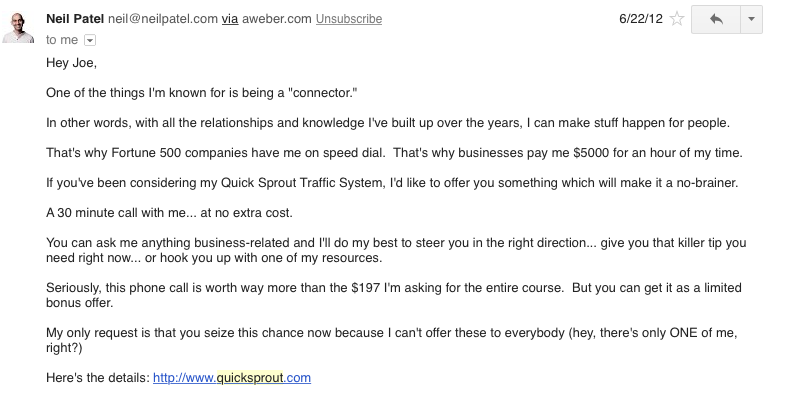
Suddenly, $197 feels like a massive bargain.
Your goal is to help customers see your price as an investment in a bigger, better future. Will it help them earn more, save more, or improve their life in a way they can’t put a number on? Paint that picture everywhere: in your copy, in your emails, and in your social media. When people believe the return outweighs the cost, the number stops being an obstacle.
Sales objection 2: Procrastination
We've all stood in front of an empty fridge at 10 PM, debating whether rice and hot sauce counts as dinner because we kept putting off grocery shopping. Your customers do the same thing with your product: they convince themselves they’ll buy “later” because there’s no urgency to act now. But later often becomes never, and you lose the sale not because they didn’t want it, but because the timing never felt pressing.
The solution is simple:
Convey a sense of urgency to your customers
You have to give them a reason to act immediately. Danny Margulies’s “Reverse Discount” strategy is a great example that cracks this code: Instead of lowering the price, he raised it—but gave people five days to get in at the original cost before it jumped by $200. The deadline created urgency, the higher future price increased perceived value, and the result was $67,000 in sales in under a week.
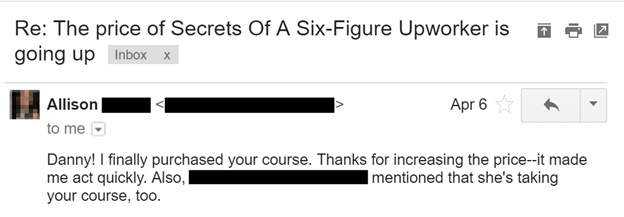
You can do this with price deadlines, limited spots (like offering one-on-one critiques to only 100 people), or expiring bonuses. Scarcity works best when it’s real and visible; “Only 3 spots left” is more powerful than “Limited space available.” Make them feel that waiting has a cost, and hesitation will turn into action.
Sales objection 3: “This won't work for people like me”
Many customers believe they’re the exception. They convince themselves they’re different in a way that will make your product ineffective: wrong age, wrong background, wrong circumstances. This “special snowflake” thinking gives them a reason to avoid the risk of trying and disqualifies your product.
So what do you need to do?
Prove your product works for everyone (including them)
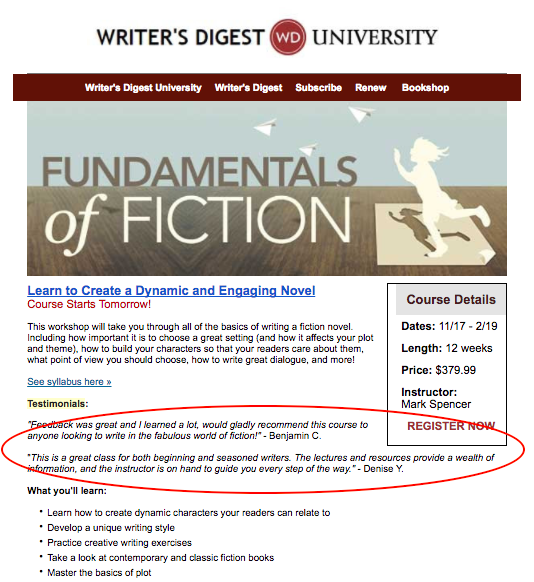
The answer is proof—specifically, proof that speaks directly to their situation. Generic success stories won’t cut it, so you’ll need testimonials and case studies that show a wide range of people, ideally starting with skepticism and ending with results. P90X’s fitness website does this brilliantly, showcasing transformations across genders, ages, fitness levels, and starting points.
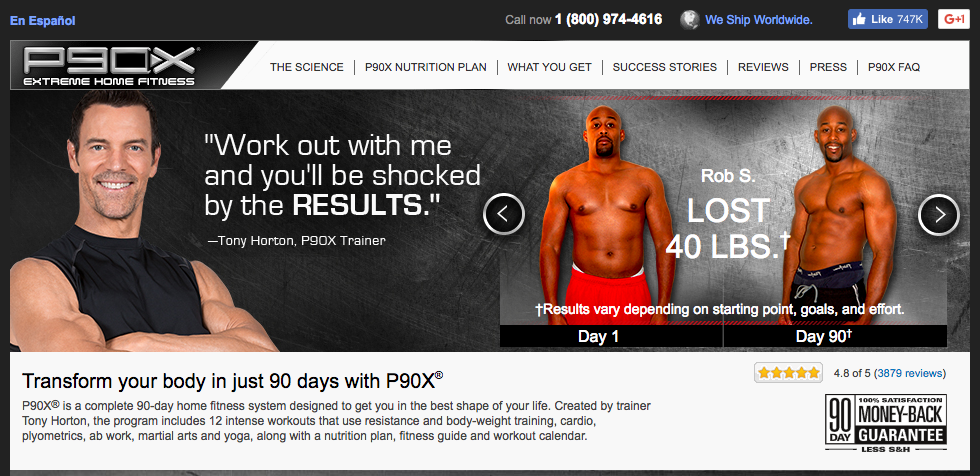
Even better, highlight stories where customers say, “I didn’t think this would work for me, but…” and place them everywhere: sales pages, emails, and social media. The more someone sees people like themselves succeed, the harder it is for them to claim it won’t work for them too.
Sales objection 4: Fear of making the wrong decision
Sometimes price isn’t the real barrier—fear is. Nobody wants to be the person who spent money on the wrong thing or on something that turned out to be garbage. Even when your product fits their budget perfectly, that little voice starts whispering: "But what if this is a mistake? What if there's something better? What if I'm throwing money away?" This hesitation is powerful because doing nothing feels safer than making a mistake.
Make buying feel completely risk-free
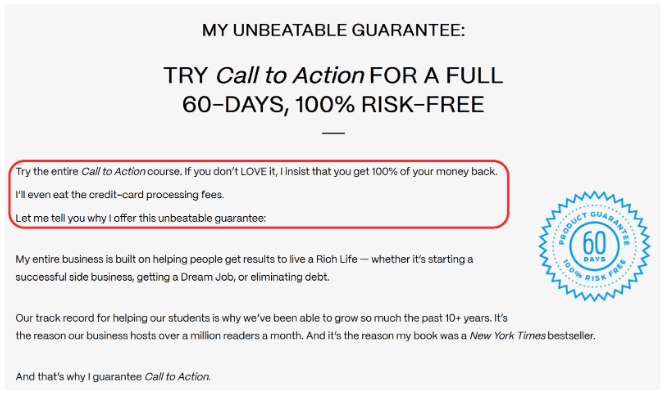
The way around this obstacle is to remove the risk entirely. A strong, clear guarantee shifts the burden from the buyer to you. For example, I Will Teach You To Be Rich’s Call to Action copyright insights course promises business growth and offers guarantees on its programs that give customers 60 days to try it out risk-free; if they’re not happy, they get their money back.
Hyundai took this even further during the 2009 recession with their Assurance Benefit, which let customers return cars if they couldn’t make payments within the first year. Imagine if Best Buy offered that deal on laptops—the fear of buyer's remorse would vanish completely.
Your guarantee should be specific (what they can expect, how long they have) and bold enough to feel like a safety net. When customers know they can walk away without losing, their fear of making the wrong choice disappears.
Sales objection 5: There might be something better out there
Even if shoppers love what you offer, they’ll check competitors “just in case” there’s something faster, cheaper, or better. If they leave your page to research, you’ve lost control of the conversation—and probably the sale.
Here’s what you can do about it:
Do the homework for them (and win)
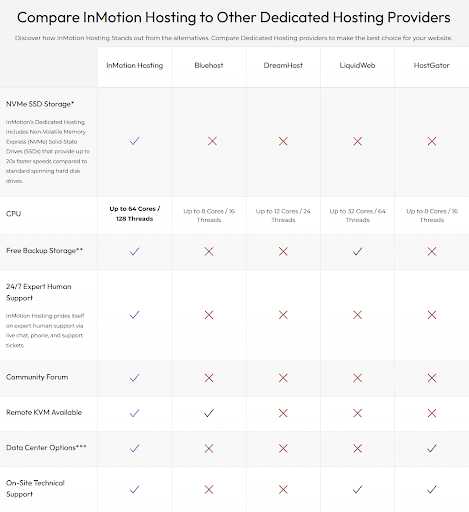
The fix is to give them the comparison before they go looking. InMotion Hosting uses a detailed comparison chart right on their site, showing exactly how they outperform competitors across every feature that matters. The customer gets the reassurance they need without ever leaving the page, and InMotion controls how that information is presented.
For your product, this might mean addressing common alternatives directly. Selling an eight-week program? Acknowledge the four-week versions out there, then explain why they fail to produce lasting results. Compare your course to DIY options and show how your added accountability or expertise makes all the difference. If you do the research for them and frame the results in your favor, they’ll have no reason to look elsewhere.
Create an Irresistible Offer That Compels Customers to Say “Yes” with the Demand Matrix
You won’t always have the chance to personally talk someone through every hesitation they have about buying. That’s why it’s smarter to build an offer that naturally clears objections before they become a problem. If people already want what you’re selling—and are willing to pay for it—you’ve removed half the battle.
That’s where the Demand Matrix comes in: It’s a simple way to test a business idea before you invest serious time and energy into it. The framework sorts ideas by looking at two critical factors: how many people want your product and how much they’re willing to pay. This creates four distinct categories:
Golden goose: high price, many customers
This is the jackpot category, where the demand is huge and customers are happy to pay premium rates. Think of products like iPhones, which sell in massive quantities despite their high price tags, or specialized online programs in lucrative niches like career advancement or investing. Businesses in this quadrant can scale quickly and command loyalty because their offer solves a problem so urgent and important that price becomes almost irrelevant.
Mass market: low price, many customers
Here, the appeal is broad and the price point is accessible. Examples include coffee, paperback books, and Netflix subscriptions. The profit per sale is small, but high volume makes it work. The challenge is maintaining consistent sales flow and managing slim margins, which means operational efficiency and customer retention become critical for profitability.
High-end: high price, few customers
This is where luxury brands like Rolex, elite coaching, and specialized consulting live. The customer pool is smaller, but each sale can be worth thousands—or tens of thousands—of dollars. Success here comes from targeting the right audience, delivering exceptional value, and building exclusivity. You don’t need hundreds of buyers; a handful of loyal, high-paying clients can sustain the entire business.
Labor of love: low price, few customers
The riskiest category, where dreams go to die. Products here tend to be deeply personal to the creator but lack the mass appeal or pricing power to generate significant profit. These might include niche handmade crafts, hyper-specific hobby blogs, or low-cost tools for tiny markets. They’re perfect as passion projects or side hustles, but unless you can raise prices or broaden your audience, they rarely grow into sustainable businesses.
When you choose an idea that falls into a profitable category, you instantly lower objections like “It’s too expensive” or “I’m not sure it’s worth it.” If you’re solving an urgent problem for a market willing to pay, your offer will feel like a no-brainer—and instead of pushing people to buy, you’ll have them asking how soon they can start.
Living Your Rich Life: Rejection into Revenue
It’s discouraging when your product gets ignored or rejected, but armed with these objection-handling strategies and the Demand Matrix, those lost sales can turn into your best opportunities for growth. When potential customers see undeniable value, feel urgency to act, recognize themselves in your success stories, and believe they’re making a risk-free decision, the usual objections lose their power. Customers stop stalling and start buying.
Remember: You don’t have to get it perfect from the start. You just need to keep testing, listening, and refining. Over time, you’ll build a business where the offer itself handles most of the selling. When you’re creating something people truly want, at a price they’re eager to pay, you’re not just closing sales—you’re building your version of a Rich Life, one satisfied customer at a time.
Stay in the know
Be the first one to receive new releases,
special offers, and more